
This event is all ages.
All doors & show times subject to change.
Add this event to your calendar:
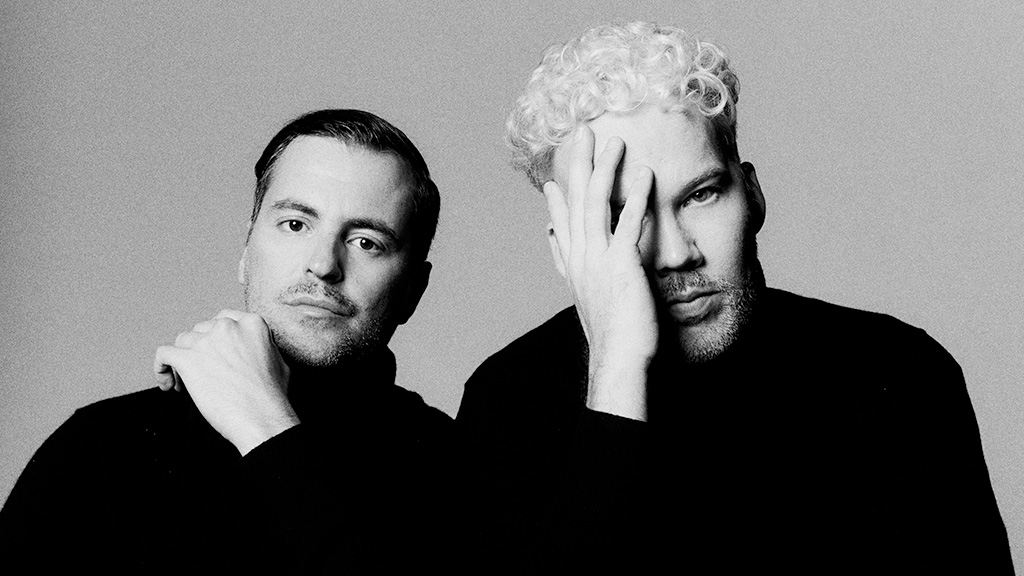
Polo & Pan
On March 28th, 2025, Polo & Pan will release their third album “22:22”, via Hamburger Records and Ekler. Following the success of Caravelle and Cyclorama, the French duo refines their sound across 12 French Touch-infused tracks, blending live instrumentation, analog recording techniques, and collaborations with Metronomy’s Joseph Mount, Beth Ditto, Kids Return, PawPaw Rod, and Arthur Teboul. Symbolizing balance and creativity, “22:22″ embraces a dreamy, playful universe where disco, pop and house collide. Ahead of the album release, the duo shared the lead single Disco Nap, featuring Metronomy and a second disco-infused electronic single, The Mirror. Their sold-out European tour culminates in two nights at L’Olympia before heading to Coachella, Red Rocks, and beyond. Crafted in their Parisian studio using vintage gear and recorded mostly to tape, “22:22” captures the magic of live takes and timeless sound. With this album, Polo & Pan push their signature style further, offering a refined and imaginative take on modern French pop.
Sofia Kourtesis
There’s a surprising relationship at the centre of Sofia Kourtesis’ debut album Madres. An album in large part dedicated to her mother, there’s also another person, one without whom this album would never have been made. Peter Vajkoczy. Vajkoczy is a neurosurgeon, one of the very best neurosurgeons in the world in fact, and Madres is dedicated to him. The story of how a world-renowned neurosurgeon came to appear in the liner notes of this record is one of tenacity, miracles, all-consuming love and ultimately, of hope.
When she began work on her debut, Kourtesis was seemingly unstoppable. A string of rapturously received EPs and singles made her one of the fastest rising stars in the electronic world and beyond. She has already graced the cover of Mixmag, released a brilliantly energetic and moving Resident Advisor ‘RA Session’, appeared on ‘End of Year’ lists from the likes of The New York Times, Pitchfork, DJ Mag and Spotify (#6 Best Electronic Song) and played instant sell-out early shows at London’s Lafayette and Manchester’s YES as well as standout performances at Glastonbury, Green Man, Wide Awake and Primavera and tours supporting Caribou and Bicep.
In amongst touring and working though Sofia was rushing home to Peru at any opportunity to be with her mother, who some months after the passing of her father – the subject of Kourtesis’ breakout single ‘La Perla’ – had been diagnosed with cancer and was deterioratingly rapidly. “Doctors were all the time calling me to say goodbye to her, for months” she recalls.
Refusing to lose hope, Sofia had spoken to every doctor she could get hold of and all of them told her chances were low, operation was too risky. Having read about Vajkoczy but knowing he was in incredibly high demand; in desperation she posted a music snippet (that would go on to be title-track and previous single ‘Madres’) on social media. “If anyone can put me in touch with Peter Vajkoczy, I’ll dedicate this song to him. I just need two minutes to talk to him”, she wrote. Vajkoczy heard it and, remarkably, reached out, “can you be here tomorrow?”, he replied. He agreed to operate, it would take hours and was incredibly risky, but he would try. The operation was a success and Sofia’s mother’s life is extended further than anyone could have possibly hoped.
With her mother now well and living nearby in Berlin, Kourtesis had her life back. Madres is the product of that life. It contains shades of the struggle of those years and her own mental health journey, as well as shuddering to a to a halt midway through for ‘Moving House’, a rumination on a breakup. Overall though, Madres is joyful, awash with warm light and brimming with “hope and the value that big love can create miracles”. It’s also filled with the minutiae of life that Kourtesis didn’t have time or energy for; going out with friends, dating, dancing, eating, living. The playful, summer-evening warmth of ‘Si Te Portas Bonito’ for example is a track about, “the mood of going out, being flirty and meeting a girl that I like, or a boy that I like, experimenting with my queerness”, while ‘Habla Con Ella’’s twinkling shuffle grasps the feeling of those conversations you have while out with friends, “talks that you need, just talking to feel better, you know?”.
Madres wasn’t recorded in any one place. Part of what has always made Kourtesis’ music unique is the melding of her Berlin home and her South American upbringing, two cultures that really couldn’t be further apart. Ideas are often had on the fly while traveling around or between her dual homes. The bright, breezy technicolour of Peru combines with the clubbier, more driven elements of her life in Berlin. As she puts it, “my heart is very Latin American, but my motor is German”.
The embracing of those two worlds hasn’t always been easy though. Sofia moved to Berlin as a teenager to escape. “I had to leave Peru because I was feeling very bullied because of my queerness”, she says. Having been kicked out of school for kissing a girl, she was sent to the priest and finally to conversion therapy. Despite support from her family, she faced rejection in her community and fled to Germany, “to feel more liberated and more free, able to be more creative. Because when you are very mentally fragile, you’re not able to create”.
Once in Berlin she was free to do just that. Newfound freedom of expression came out through music but also allowed her to embrace her role as an activist both in Germany and when back home in Peru. Taking inspiration from the activism of both her parents (her father was a pro-bono lawyer during the Fujimori presidency period in Peru, and ‘Cecilia’ is based around her mother’s lifelong work protecting South America’s indigenous tribes), Sofia is a staunch protester and campaigner for gender equality, protection of queer people and access to safe abortions in Peru. Her music career taking off is therefore tinged with guilt, as touring means less time for this kind of work, “I feel that I am not doing enough”, she says.
Her solution is to incorporate her politics into her music career as much as she can. She hadn’t spoken about the real reason she left Peru before but now she now hopes her music and words – she is instantly inspiring in conversation – will resonate with others, her experience sadly, infuriatingly, still commonplace. ‘Estación Esperanza’ for example opens with recordings of a Peruvian protest against homophobia. It also features a rare guest spot from Manu Chao, someone who Kourtesis immensely respects for the way he weaves politics into everything he does. As someone who rarely collaborates Chao was moved by a (long) letter Kourtesis wrote him about her family, her politics, her worldview, and what she wanted to achieve.
A decidedly stronger, more determined person than when she left, Kourtesis now has a great relationship with her home-country. Peruvian culture is present in every inch of her music, her artwork, and her image. For ‘El Carmen’, she travelled to meet the Ballumbrosio family who helped to pioneer Afro-Peruvian percussion through instruments like the cajón. “This song is about our Afro-Peruvian community and how beautiful it is”, Kourtesis says, “how rich elements of music, of food, of culture, of happiness and smiling is in the community of El Carmen. The dancing of El Carmen, the sound, the smell, the colours, the happy people, it is about loving.”
Back in Germany, another important space with a dedicated track is Berlin’s Funkhaus.
Working and performing there for years, in those shaky early days arriving in Germany from Peru, Kourtesis found a community. “It’s a space I really needed, and I wanted to include that”, she says of the track ‘Funkhaus’, “I love to play very fast and hard when I’m there.”
That community appears throughout the record. Kourtesis decided to rely less on the sample heavy approach of her early work and instead recreate the samples on early draMs of the album into organic sounds and field recordings. Apart from the sounds she had recorded herself in Peru, she draMed in her Funkhaus companions alongside co-producer David Krasemann to recreate the rest. This relinquishing of a little control for the first time breathed energy and personal relationships into every aspect of the record.
Vajkoczy was remarkably present through all of this. An avid music fan himself, once the surgery was complete, he and Kourtesis remained in touch. Vajkoczy became something of a sounding board for the album as Sofia sent him tracks throughout the process. The whirling, ecstatic ‘How Music Makes You Feel Better’ was made quickly following a revelation Kourtesis shared with Vajkoczy about the healing power of music after the surgery. “I was in the airport and I said to Vajkoczy, look! Look how music makes you feel better. I was singing him the song on WhatsApp, and my singing was very bad. So I asked one of my Funkhaus colleagues Chantal Saroldi if she could sing because I couldn’t hit the sound”. Vajkoczy had no notes.
Ultimately Vajkoczy was pulled into Kourtesis’ world, it’s something that often happens with her, so infectious is her energy. “Three months after the surgery, we went to Berghain together, I took him for his first time”, Kourtesis says, “He loved it. I was like, you showed me your life, I’ll show you my life now. The way he moved and danced; it was like a dream. And then I said, now I can make the album because music, it’s making me feel better again.”